
Social Security is shifting in 2026 and the “eligibility” numbers matter
Each year, Social Security updates key thresholds tied to wages and inflation. For 2026, one of the most important updates is the amount you must earn to qualify for Social Security work credits, which are the building blocks of eligibility.
In 2026, you earn one Social Security credit for every $1,890 of wages or self-employment income, up to four credits per year. That means you earn the max four credits once you reach $7,560 in earnings for the year.
Most people need 40 credits (generally about 10 years of work) to qualify for retirement benefits.
That’s helpful to know, but it also highlights a bigger truth:
Qualifying for Social Security and funding a comfortable retirement are two very different things.
What else is changing for Social Security in 2026?
Here are several headline updates that can impact retirees and near-retirees:
1) A 2.8% COLA increase
Social Security and SSI benefits rise 2.8% in 2026 due to the annual cost-of-living adjustment (COLA).
COLAs can help, but they aren’t designed to fully solve for rising costs in retirement—especially healthcare, housing, and long-term care.
2) Higher earnings limits if you claim benefits while still working
If you collect Social Security before full retirement age and keep working, an “earnings test” can temporarily reduce benefits:
- $24,480 limit if you’re under full retirement age all year in 2026 (Social Security)
- $65,160 limit in the year you reach full retirement age (counting only earnings before the month you reach that age)
3) The Social Security taxable wage base is increasing
The maximum earnings subject to Social Security payroll tax rises to $184,500 in 2026 (up from $176,100 in 2025).
Why Social Security isn’t enough for a comfortable retirement
Social Security was designed as a foundation (a baseline layer of income) not a complete retirement plan.
Even with COLA adjustments, retirees can still face:
- inflation pressure over decades
- rising medical and insurance costs
- longer life expectancy (and a longer retirement)
- lifestyle goals that cost more than “basic” expenses
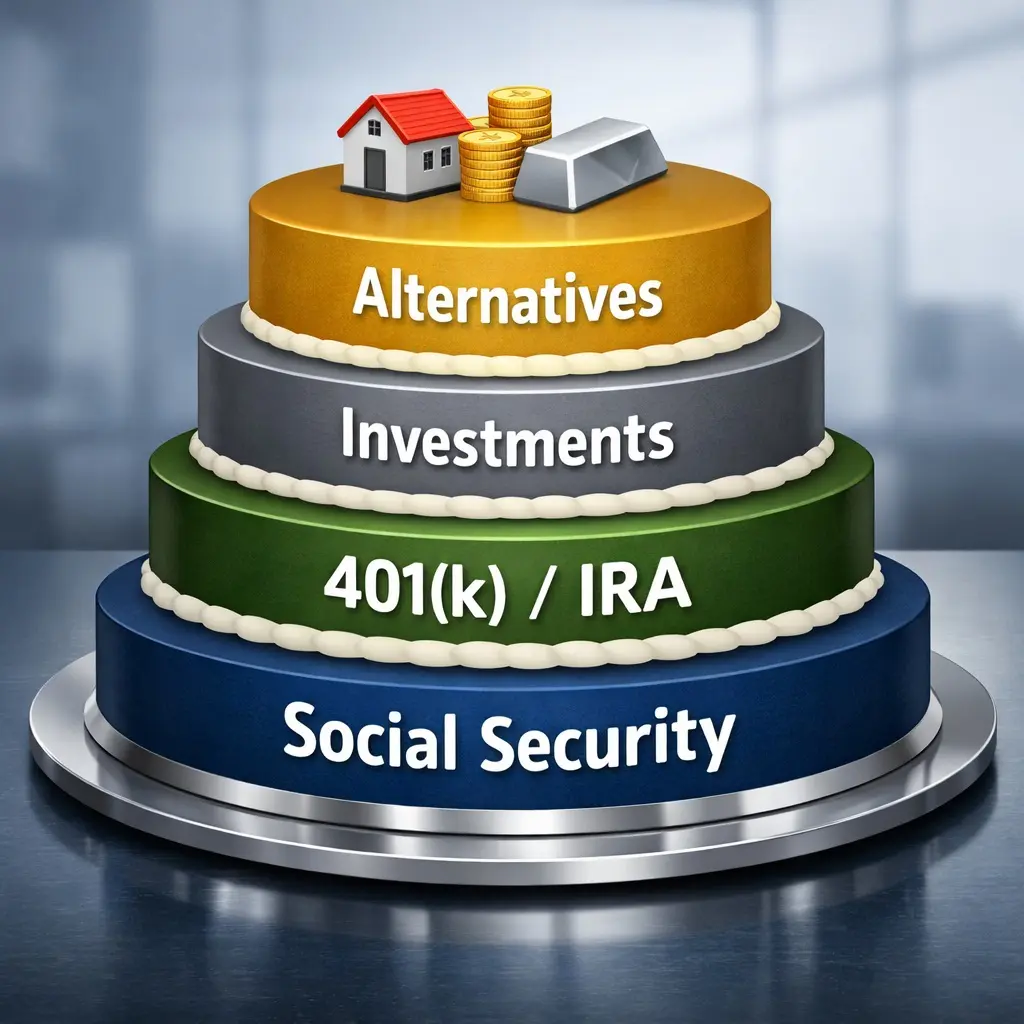
So the smartest approach is to think in layers.
The retirement “layer cake”: what a well-built plan often includes
Many confident retirees build income and growth through multiple layers, such as:
- Social Security (foundation layer)
- Employer plan (401(k), 403(b), TSP) and/or pension, if available
- IRA savings (Traditional / Roth)
- Health savings strategy (often via HSA when eligible)
- Taxable investments (brokerage, cash reserves, and flexibility funds)
- Optional: alternative assets for diversification and inflation-hedging potential
This is where a self-directed IRA can become a powerful next step—when used wisely.
How a self-directed IRA can strengthen your retirement strategy
A self-directed IRA (SDIRA) is still an IRA but it can open the door to investment options beyond typical stocks, bonds, and mutual funds.
Depending on your goals and risk tolerance, SDIRA investors may consider alternative assets such as:
- real estate (rental property, commercial, land)
- private lending / notes
- private placements (where appropriate)
- precious metals (within IRA rules)
- other alternatives permitted under IRS guidelines
Why it can help:
- Diversification: reduces reliance on a single market direction
- Potential inflation hedge: certain real assets may respond differently than paper assets
- Control & intentionality: you choose investments aligned with your strategy
“Wisely” matters: smart SDIRA investing principles
Alternative assets can be compelling—but they also demand stronger discipline. Consider these best practices:
- Do deeper due diligence than you would for a public stock
- Verify sponsors/borrowers
- Understand the business plan, exit strategy, and risks
- Review third-party documents whenever possible
- Plan for liquidity
- Some alternative assets can be harder to sell quickly
- Match the investment timeline to your retirement horizon
- Respect IRS rules
- Avoid prohibited transactions and self-dealing
- Understand who counts as a “disqualified person”
- Ask questions before you invest, not after
- Know when taxes can appear inside an IRA
- Some investments may trigger UBIT/UDFI depending on structure and leverage
- Make sure you understand the setup before funding
- Diversify within alternatives
- “Alternative” doesn’t automatically mean “safe”
- Spread risk across assets, borrowers, markets, and timelines
A self-directed IRA can be a meaningful layer, but it should be a disciplined layer, not a gamble layer.
Bottom line: build beyond Social Security
Social Security rules will keep changing: credits, COLAs, earnings limits, taxable maximums. Those updates matter, but your comfort in retirement depends on what you build around Social Security.
If you want a more resilient retirement plan, think in layers—and consider whether a self-directed IRA strategy (built on thoughtful alternative investing) belongs as one of those layers.
Compliance note: This article is for educational purposes only and does not constitute tax, legal, or investment advice. Consider consulting qualified professionals regarding your specific situation.
Contact Us:
Whether you want to invest in real estate, crypto, or private companies, we can help you get started with a self-directed IRA. We’re here to help you stay compliant while you grow your retirement wealth confidently and intelligently.
Call us today at (866) 447-6589
Email us at info@uDirectIRA.com
Book a Call: HERE
Let’s make your retirement investing work for you—not just Wall Street.